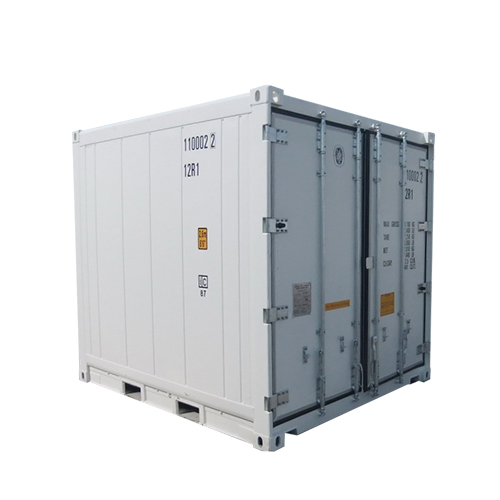
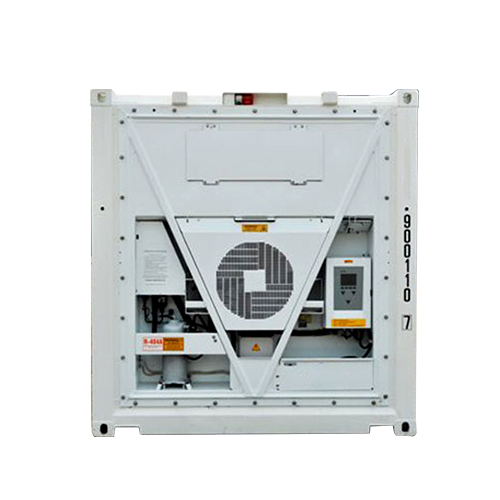


Almost all containers globally come from China – this is not a coincidence, but the inevitable result of overwhelming advantages.
You may not have realized it, but the mountains of containers you see piled up in ports are almost all stamped with the "Made in China" label. The fact that 96% of the world's containers are produced in China is not because other countries cannot make them. Rather, it is because China has built an "industrial ecosystem" in terms of cost, efficiency, technology, and scale that is exceptionally difficult for any competitor to replicate.
Advantage One: The Cost Foundation – The World's Most "Affordable" Steel
A standard container requires about two tons of steel. As a country accounting for over half of global crude steel production, China enjoys a stable and lower-cost steel supply. In comparison, the cost of building a container in the United States is roughly three times that in China, and in Europe, it's about double. This material cost advantage is the first solid cornerstone of China's manufacturing competitiveness.
Advantage Two: The Industrial Ecosystem – A Complete Support Network Within "100 Kilometers"
Manufacturing containers is not a single-factory affair; it involves hundreds of supporting enterprises providing steel, paint, door locks, sealants, equipment, and more. In China, particularly in the Yangtze River Delta and Pearl River Delta regions, virtually all these suppliers are located within a 100-kilometer radius. This "full-industry-chain ecosystem" has generated enormous economies of scale. Coupled with advanced processes like automated welding and AI-powered quality inspection, a single factory can achieve an annual production capacity of up to one million TEUs, driving costs down to the extreme. This clustering effect is difficult for other countries to duplicate.
Advantage Three: The Port Loop – The Logistical Marvel of "Born to Set Sail"
Major container manufacturing plants in China are typically located in close proximity to global megaports like Shanghai, Ningbo, Tianjin, and Shenzhen. Once a new container rolls off the production line, it can be directly lifted onto a vessel, loaded with cargo, and exported. This seamless integration of "manufacturing to loading" minimizes logistics costs and turnaround time. Simultaneously, as the "world's factory," China's massive export demand itself generates enormous demand for containers, creating a natural closed loop of "manufacturing - container usage - exporting."
Advantage Four: Technological Barriers – Industry Standards Led by Giants
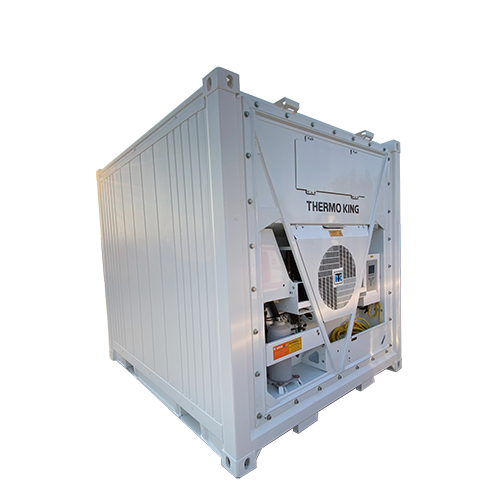
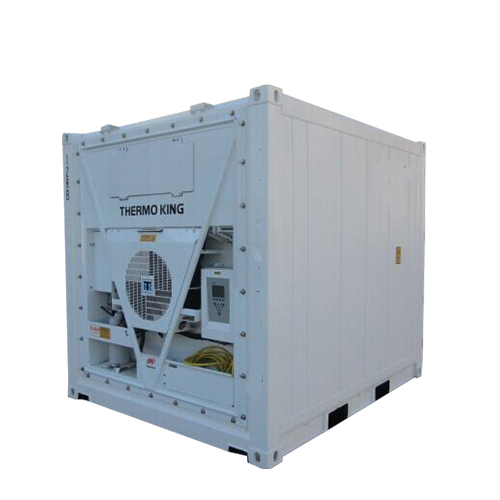
Some 96% of global container production capacity is concentrated in China, with giants like CIMC, Shanghai Universal, and Singamas controlling over 80% of that capacity. These companies not only produce standard dry containers but also hold industry standards and patents in core technologies for refrigerated and specialized containers. This is no longer just manufacturing; it is defining technical standards.
Why Other Countries Struggle to Compete
European and American countries are constrained by high labor and environmental costs, making it difficult for them to engage in low-margin steel manufacturing. South Korea, despite early investments in the industry, has shifted its focus to higher value-added sectors. Meanwhile, nations in Southeast Asia and India face bottlenecks such as insufficient steel supply and lower port efficiency. In short, it is not that they do not want to compete, but that it is very difficult for them to do so more effectively than China.
Conclusion
The large-scale production of containers in China has long transcended the simple narrative of "cheap labor." It is the profound result of a deep coupling of five key factors: steel advantage, industrial clustering, port efficiency, economies of scale, and technological innovation. This has created a highly efficient and hard-to-replace global container supply chain ecosystem centered on China. The rows of blue, white, and yellow containers seen in ports are vivid emblems of China's comprehensive manufacturing strength.